Industrial edge equipment connecting factory, data center, and building operations signals

Get OTI / Operational Technology Intelligence

Put AI to work in physical operations.

Splunk OT Intelligence turns edge signals from factories, data centers, and smart buildings into governed intelligence in Splunk Platform, so teams can analyze, model, and act on what is happening in the physical world.

Factory telemetryData center resilienceBuilding systems
Physical signalAI operations path
Edge intelligenceFilter, infer, route
Data fabricTier, federate, govern
ActSearch, twins, agents, alerts

Signals from the edge.

Context in Splunk Platform.

AI that understands the site.

Physical operations

The evidence already exists. It just needs an intelligence layer.

Factories, data centers, and buildings already emit the signals that explain performance, risk, and resilience. OTI helps make those signals usable by people and AI.

Factories

Make production data useful beyond the control room.

Machine telemetry, downtime events, quality signals, safety observations, and maintenance context become searchable evidence for operators, engineers, and AI-assisted analysis.
  • Machine state
  • Quality
  • Downtime
  • Safety
  • Energy

Data centers

Connect power, cooling, and capacity to resilience.

Power draw, thermal conditions, capacity pressure, environmental readings, and incident context can flow into the same Splunk workflows used for IT and security operations.
  • Power
  • Cooling
  • Capacity
  • Thermals
  • Incidents

Buildings

Bring facilities signals into the operating model.

Occupancy, energy, comfort, access, security, and facilities operations data can become governed context for better building performance and faster investigation.
  • Occupancy
  • Energy
  • Comfort
  • Access
  • Facilities

How it works

From edge signal to AI action.

OTI is the path from physical-world telemetry to governed Splunk intelligence: collect the signal, use compute at the edge, model the data, and activate workflows that operators can trust.

01

Connect

Capture the physical signal

Bring in data from sensors, controllers, meters, building systems, industrial devices, and edge infrastructure across the site.
02

Compute

Use edge intelligence where it matters

Filter, normalize, enrich, route, and run local models close to the environment when latency, bandwidth, or autonomy matters.
03

Context

Model the data for Splunk

Turn raw physical telemetry into governed operational context that teams can search, correlate, retain, and reuse.
04

Act

Power AI-assisted operations

Use dashboards, alerts, investigations, digital twins, and agentic workflows that understand what is happening in the physical world.

Edge intelligence

The edge is where the signal becomes useful.

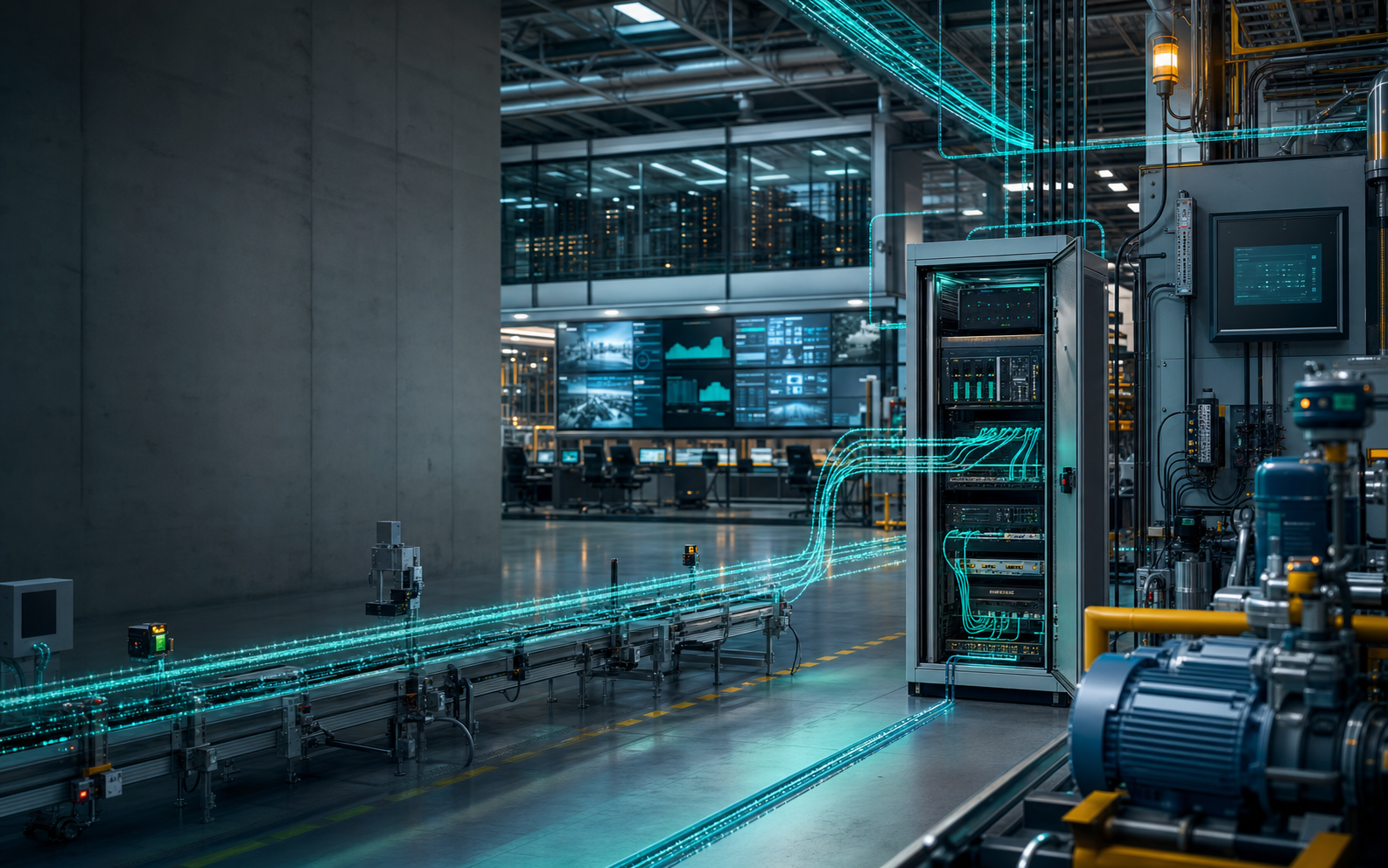
Splunk Edge Hub and other edge devices can help connect physical operations, shape noisy telemetry close to the environment, run models where local context matters, and route governed data toward Splunk Platform.

Why Splunk Platform

Physical operations need an enterprise data platform.

OTI becomes powerful because it runs on Splunk Platform, the machine-data foundation that powers Cisco Data Fabric. Site signals can join the same search, governance, federation, storage, AI, and workflow context as the rest of the enterprise.

Splunk Platform turns raw machine data into governed, searchable operational context at enterprise scale.

Cisco Data Fabric, powered by Splunk Platform, brings data management, federation, storage, and AI-oriented machine data architecture into the story.

AI and agentic workflows work better when they can reason over contextualized site data instead of disconnected dashboard exports.

Cisco Cloud Control points to a broader operating model where Cisco and Splunk workflows can reduce tool sprawl and context switching.

Physical operationsMachines, meters, controllers, facilities
Edge intelligenceFilter, infer, normalize, route
Splunk PlatformSearch, govern, federate, retain
Cisco Data FabricMachine data ready for AI and agents

What becomes possible

Use cases that start with signals and end with action.

The same intelligence layer can support operators, engineers, facilities, IT, security, and business stakeholders.

Digital twin context

Feed models and simulations with live site data so teams compare expected behavior against what is actually happening.

Predictive maintenance

Use runtime, vibration, temperature, and process patterns to spot early signs of equipment degradation.

Energy optimization

Connect meters, loads, operating modes, and site context to analyze energy performance across physical operations.

Thermal and environmental control

Track temperature, humidity, air quality, leaks, pressure, and other physical conditions that shape resilience.

Industrial security context

Correlate process behavior, device state, access events, and network telemetry during investigations.

Remote operations

Bring edge and remote sites into the same Splunk Platform workflows as core facilities and digital systems.

Get OTI

Bring physical operations into the AI era.

Start with the signals your sites already create. Use edge intelligence to shape the data. Bring governed context into Splunk Platform, and give people and AI a clearer view of the physical world.